
From Assembly Line to Delivery: The Engineering Systems Behind Automotive Manufacturing
The automotive industry is often associated with speed, precision and large-scale production. What many people do not see is the complex network of engineering systems working silently behind every vehicle that rolls out of a manufacturing facility. From the first stage of component assembly to final vehicle dispatch, automotive manufacturing depends heavily on integrated infrastructure that supports consistency, efficiency and operational continuity.
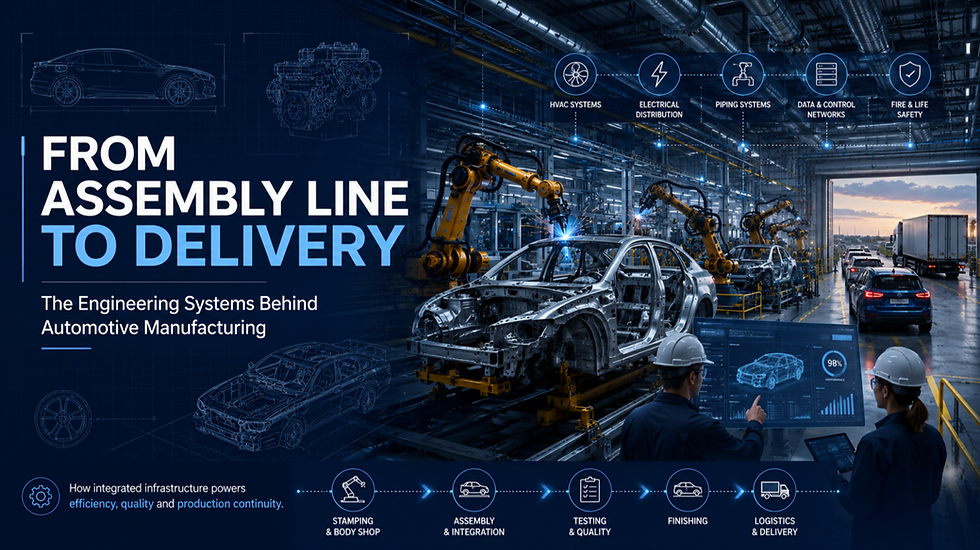
Modern automotive plants are designed to handle far more than production alone. They operate as interconnected ecosystems where mechanical, electrical and plumbing systems directly influence product quality, worker safety, energy performance and manufacturing timelines. Every robotic movement, paint application, welding process and testing operation depends on reliable infrastructure functioning in sync.
Automotive manufacturing today is driven by automation and accuracy. Robotic assembly lines require stable electrical systems capable of handling fluctuating loads without interruption. Even a short power disturbance can affect production schedules, create calibration issues or result in product defects. Facilities therefore rely on robust electrical distribution systems, backup power infrastructure and real-time monitoring solutions to maintain uninterrupted operations.
HVAC systems also play a critical role across automotive plants. Different manufacturing zones require controlled environmental conditions to support specialised processes. Paint shops, for example, demand strict temperature, humidity and air filtration control to maintain coating quality and surface consistency. Poor environmental management in these areas can lead to rework, material wastage and production delays.
Ventilation systems are equally important in welding and assembly zones where heat, fumes and airborne contaminants must be managed effectively. A properly designed ventilation strategy improves working conditions while helping facilities maintain operational efficiency. As manufacturing scales increase, airflow management becomes even more important in maintaining equipment performance and process reliability.
Compressed air systems form another essential part of automotive manufacturing infrastructure. Many automated tools, robotic arms and production equipment rely on compressed air for continuous operation. Any instability in pressure or distribution can directly affect assembly accuracy and production speed. Modern facilities increasingly focus on energy-efficient compressed air management to reduce operational costs without compromising performance.
Water management systems are also deeply integrated into automotive manufacturing processes. Cooling systems, process water circulation and wastewater treatment infrastructure support several production stages. Facilities today are under growing pressure to reduce water consumption while maintaining process efficiency. This has led to increased adoption of recycling systems, efficient pumping infrastructure and smarter monitoring technologies.
One of the biggest challenges automotive manufacturers face today is balancing production demand with energy efficiency. Facilities are expected to increase output while controlling operational costs and meeting sustainability targets. High energy consumption from HVAC systems, robotic automation and utility infrastructure can place significant pressure on plant performance.
Another challenge is maintaining infrastructure reliability during continuous production cycles. Automotive plants often operate around the clock with minimal tolerance for downtime. A failure in electrical systems, cooling infrastructure or ventilation networks can quickly impact production schedules and supply chain commitments. Preventive maintenance, predictive monitoring and scalable engineering systems are becoming increasingly important in reducing these risks.
The rise of electric vehicles is also reshaping automotive manufacturing infrastructure. EV production facilities require new approaches to thermal management, battery assembly environments and electrical load planning. Battery manufacturing processes generate unique cooling and safety requirements that demand advanced MEP solutions and specialised environmental controls.
Smart manufacturing technologies are further transforming the industry. Automotive plants are increasingly adopting IoT-enabled monitoring systems, automated energy management and data-driven facility optimisation tools. Real-time visibility into utility performance allows operators to identify inefficiencies early and improve operational decision-making across the facility.
Engineering solutions in automotive manufacturing today are no longer limited to supporting production equipment. They are directly connected to productivity, product consistency and long-term operational resilience. Facilities require infrastructure that is scalable, energy-efficient and capable of adapting to future manufacturing demands.
At Comfonomics, we understand how critical engineering infrastructure is within high-performance industrial environments. From electrical systems and HVAC solutions to ventilation, cooling and integrated MEP infrastructure, our approach focuses on creating systems that support operational continuity, efficiency and long-term manufacturing reliability. As automotive manufacturing continues to evolve, resilient engineering systems will remain central to delivering smarter and future-ready facilities.


Comments